
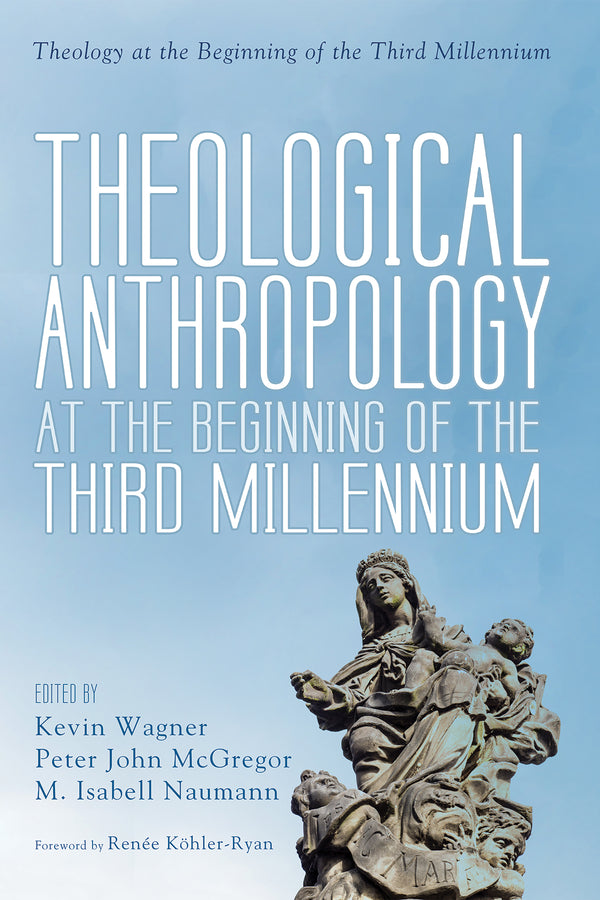
Theological Anthropology at the Beginning of the Third Millennium
Series: Theology at the Beginning of the Third Millennium
Also available as

Please note: eBooks must be read using the Glassboxx app. After purchasing, you will receive an email with instructions to access your eBook. Thank you for supporting us by buying direct.
About this book
Praise for this book
“The fruitfulness of Australian Catholic theology continues to inspire. This book stands as an exemplar of what ressourcement in theology is and should be. From the church fathers through Aquinas and the medievals, from East and West, and across a wide swath of more recent theologians, saints, philosophers, and scientists, this book lifts up the most central themes of Christian anthropology and does so in a nuanced, dialogic, and beautifully evangelistic way. Highly recommended!”
Matthew Levering, Mundelein Seminary
Adam G. Cooper, Catholic Theological College
“This collection of essays serves as a broad catalogue of currents in theological anthropology in the contemporary Australian scene. With topics ranging from patristics, personalism, and prayer to embodiment, existentialism, and evolution, the contributors explore the insights of such diverse figures as Augustine and Aquinas, Freud and Foucault, Mascall and Marion. Both historical and systematic in focus, it provides a valuable reference to key points of contact, continuity, and conflict for Christian anthropology in the third millennium.”
Paul O’Callaghan, Pontifical University of the Holy Cross
“A surprisingly versatile collection of essays on Christian anthropology, Theological Anthropology at the Beginning of the Third Millennium comes across as a true interdisciplinary work. Covering a wide range of topics and authors, it still offers a powerfully well integrated, christological view of the human being in the light of faith, hope, and charity, inspired to an important degree in the writings and thought of Saint John Paul II.”
Beáta Tóth, Sapientia College of Theology
“‘I have become a question to myself’—more than ever, our age feels the weight of the Augustinian dictum in its search for a renewed understanding of what it means to be human. This volume contains a wonderfully inspiring set of reflections on crucial aspects of an anthropological vision which takes into account the gift character of human existence over against the hubris of a self-contained consumerist, technological milieu. A refreshing read in troubled times.”
Have a manuscript? Submit a book proposal!
