
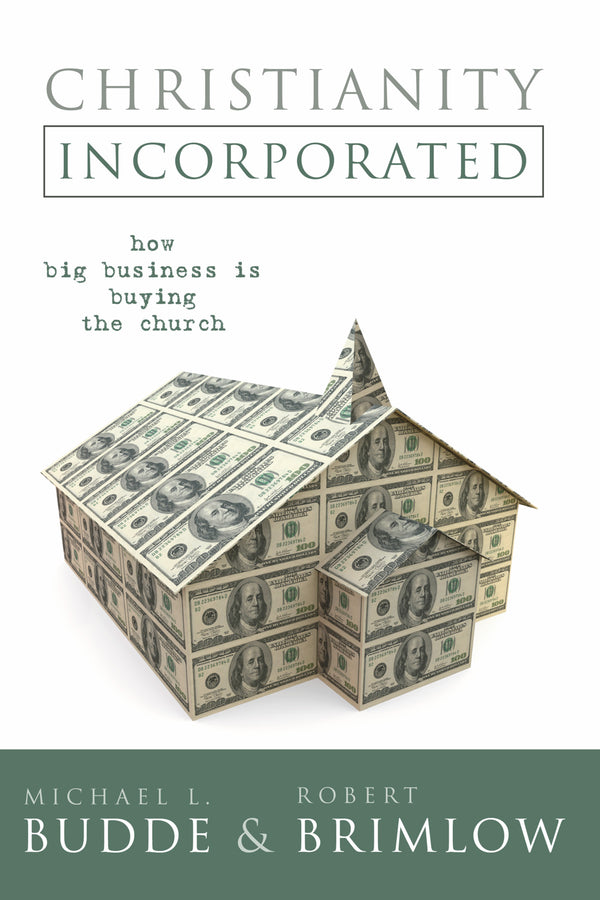
Christianity Incorporated
How Big Business is Buying the Church
Also available as
About this book
According to authors Michael Budde and Robert Brimlow, the church must resist becoming the "chaplain to capitalism." Christianity Incorporated reminds us that Christ-centered discipleship is fundamentally at odds with consumer capitalist priorities. The church must have a mission and a voice in society that is distinct from, rather than in chorus with, watered-down corporate spirituality.
Christianity Incorporated is a wake-up call for all Christians. Courageous, current, and accessible, this book will provide guidance and insight to anyone concerned with pursuing Christian discipleship in our consumer culture.
Praise for this book
This is not a pleasant book. It is bitter and bracing like the wormwood tea my grandmother used to make--something I remember with gratitude and affection. And so I will remember this book.
Albert Borgmann, author of Holding on to Reality
A deeply important analysis of the relationship between the ideological power of capitalism and the radical claims of discipleship central to Christian faith. Budde and Brimlow explicate the aggressive totalism of consumer capitalism in its capacity to preempt Christian faith and reduce it to a chaplaincy function for the defining ideology of our society.
Walter Brueggemann, Columbia Theological Seminary
The analysis is offered on two distinct levels. First, corporations find the facade of Christianity useful and amenable for the whole-life environment they seek to create. Second, Budde and Brimlow show how Lockean (possessiveness) permeates thinking even among the churches in their critical posturing. The book is sure to be in dispute, but the disputes it may evoke are simply signals of the powers of the analysis offered here and the expose of what is happening among us, both practically and intellectually. The authors trust that truth is not for sale, but their own analysis is enough ground for anxiety and alertness.
Budde and Brimlow have given us a dose of a new reality. Combining wit, hard social-science evidence, and a passion for true Christian discipleship, they show how the political and economic entities that promise us comfort and prosperity have, in fact, captured Christianity and warped it to their own self-serving, power-centered ends. Without moralisms or cant, the authors point out Christian failures in the face of late modern capitalism, showing ways in which we may yet become rich, clothed, and aware of what kills and what saves. this book is a must read for everyone who thinks that Christianity is synonymous with the celebration of American prosperity and freedom, and for everyone who has doubts but cannot quite say why.
Thomas Heilke, University of Kansas
Have a manuscript? Submit a book proposal!
