
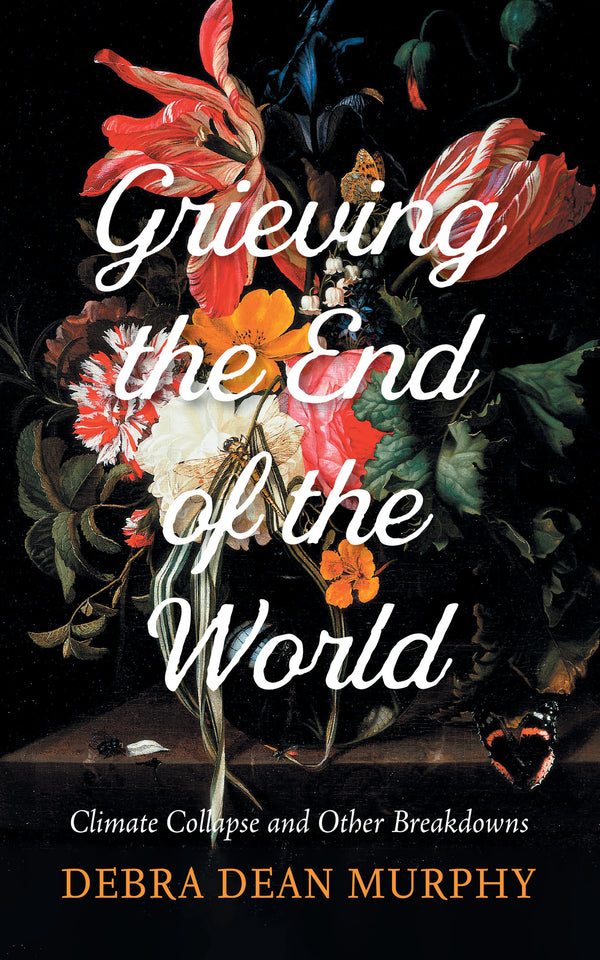
Grieving the End of the World
Climate Collapse and Other Breakdowns
Also available as
About this book
Within the context of climate collapse and other breakdowns, Grieving the End of the World traces grief through a fourfold interpretive frame: geographies, theologies, aesthetics, and practices. It ponders questions like how do we grieve with hope the losses past and losses still to come? How might good grief orient us to wonder and presence—gifts that allow us to bear witness to all that is, and always has been, precious? And how can we discover our rightful place in the communion of subjects, all our creature kin, with whom we are at stake?
Praise for this book
Grief is the price we pay for love. . . . But Debra Dean Murphy has the depth and courage to enable us to stay in this place long enough to let it speak its wisdom to us and allow grief to encompass not just our personal deprivations, . . . but wider degrees of fragility and dismay, while at the same time understanding that grief includes what we never had but always longed for. Murphy shows us how to encounter the truths we most earnestly shrink from and sits with us till hope emerges.
Samuel Wells, Vicar, St Martin-in-the-Fields, London
Jonathan (Cat) Tran, Theology Faculty, Duke Divinity School
In this searching and honest exploration of grief's many dimensions, Debra Dean Murphy invites us to be transformed by our pain and loss so that we might together participate in the divine love that does not abandon this wounded world. I heartily recommend this wise, compassionate, and practical book.
M. Therese Lysaught, Rose F. Kennedy Chair of Christian Ethics, Kennedy Institute of Ethics
Debra Dean Murphy centers grief as a crucial lens for understanding the escalating cry of creation, places, and people as disaster and loss mount. Grounded in aesthetics, theology, and liturgy, Murphy's personal and poetic meditation on what we have lost due to climate change . . . brings these losses home to our particular communities and lives while also tracing their interconnections with the myriad violences that afflict contemporary communities. Murphy . . . reorients and returns readers to foundational grief practices from across traditions that help us learn how to invite grief fully into our lives while also forming us to live more intentionally in communion with God's miraculous creation.
Have a manuscript? Submit a book proposal!
