
Wipf & Stock

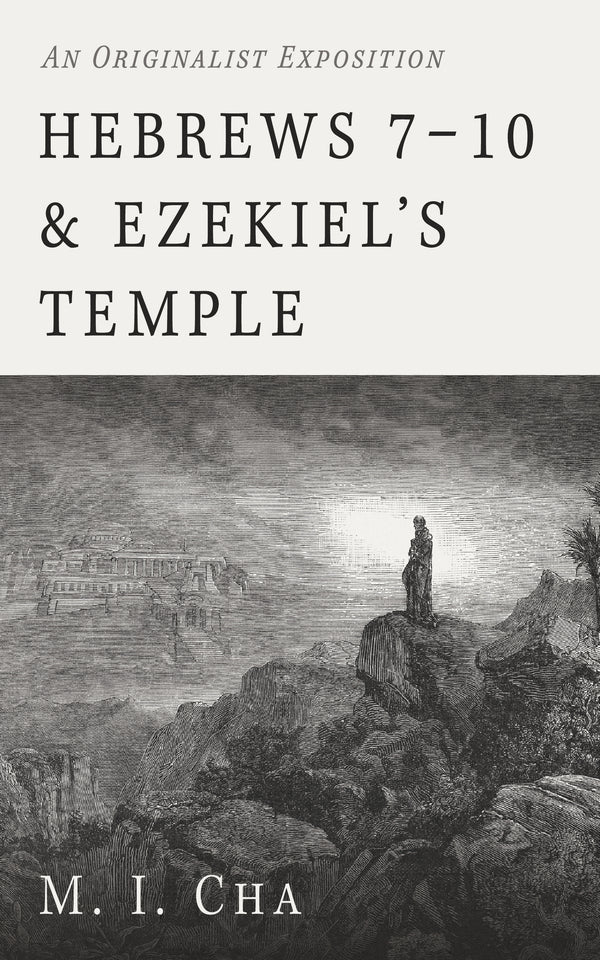
Hebrews 7–10 and Ezekiel’s Temple
An Originalist Exposition
Regular price
$23.00
Regular price
$23.00
Sale price
$23.00
Also available as

Please note: eBooks must be read using the Glassboxx app. After purchasing, you will receive an email with instructions to access your eBook. Thank you for supporting us by buying direct.
ISBN
9798385274567
Imprint
Published
August 18, 2026
Aug 18, 2026
Pages
154
Dimensions
9 in × 6 in
Audience
General / Adult
Subjects
About this book
For most, Hebrews 7-10 redefines the fulfillment of Ezekiel's eschatological temple vision. Because of confusing mistranslations, the central exposition of Messiah's high-priestly ministry in the heavenly temple in Hebrews 7-10 has been understood through supersessionist and antinomian abstractions. This study seeks to restore an originalist interpretation of Hebrews 7-10 by calibrating Ezekiel's temple vision within Second Temple Jewish thought as recorded in key pseudepigraphal and Dead Sea Scroll documents. By examining how pseudepigraphal and Qumran writings deploy Ezekiel's temple vision, we can situate Hebrews's portrayal of the Messiah's non-Aaronic priesthood and heavenly sanctuary within a broader Jewish conversation about priestly identity, the rectification of a compromised temple/priesthood, and true access to the dwelling place of God.
This study then offers an originalist exposition of Hebrews 7-10 that aims to be consistent with a normal interpretation of Ezekiel's temple vision as expressed in Second Temple Jewish literature. Such an exposition necessarily renders a reading of Hebrews 7-10 that is pronomian rather than antinomian, has a literal understanding of the eschatological sanctuary, and focuses more narrowly on the Aaronic high priesthood and Yom Kippur rite rather than sweepingly condemning the entire Levitical sacrificial system.
This study then offers an originalist exposition of Hebrews 7-10 that aims to be consistent with a normal interpretation of Ezekiel's temple vision as expressed in Second Temple Jewish literature. Such an exposition necessarily renders a reading of Hebrews 7-10 that is pronomian rather than antinomian, has a literal understanding of the eschatological sanctuary, and focuses more narrowly on the Aaronic high priesthood and Yom Kippur rite rather than sweepingly condemning the entire Levitical sacrificial system.
Publish with us
Have a manuscript? Submit a book proposal!
